Recognising and Protecting Natural Temperate Grassland
A native grassland can be easy to overlook. At some times of year it may appear dry, sparse or dominated by only a few grasses. After favourable rain, the same area may reveal lilies, orchids, daisies and other native wildflowers that were previously dormant or difficult to detect. For this reason, grassland should be approached as potentially valuable until its ecological character has been properly assessed.
Natural Temperate Grassland of the South Eastern Highlands (NTG) is one of the most threatened ecological communities in south-eastern Australia. More than 90 per cent of its former extent has been lost, and most surviving areas are small and fragmented (Commonwealth of Australia 2016). Every remaining patch therefore deserves careful consideration - not only for its legal status, but for the habitat, connectivity, ecological function and restoration opportunities it may provide.
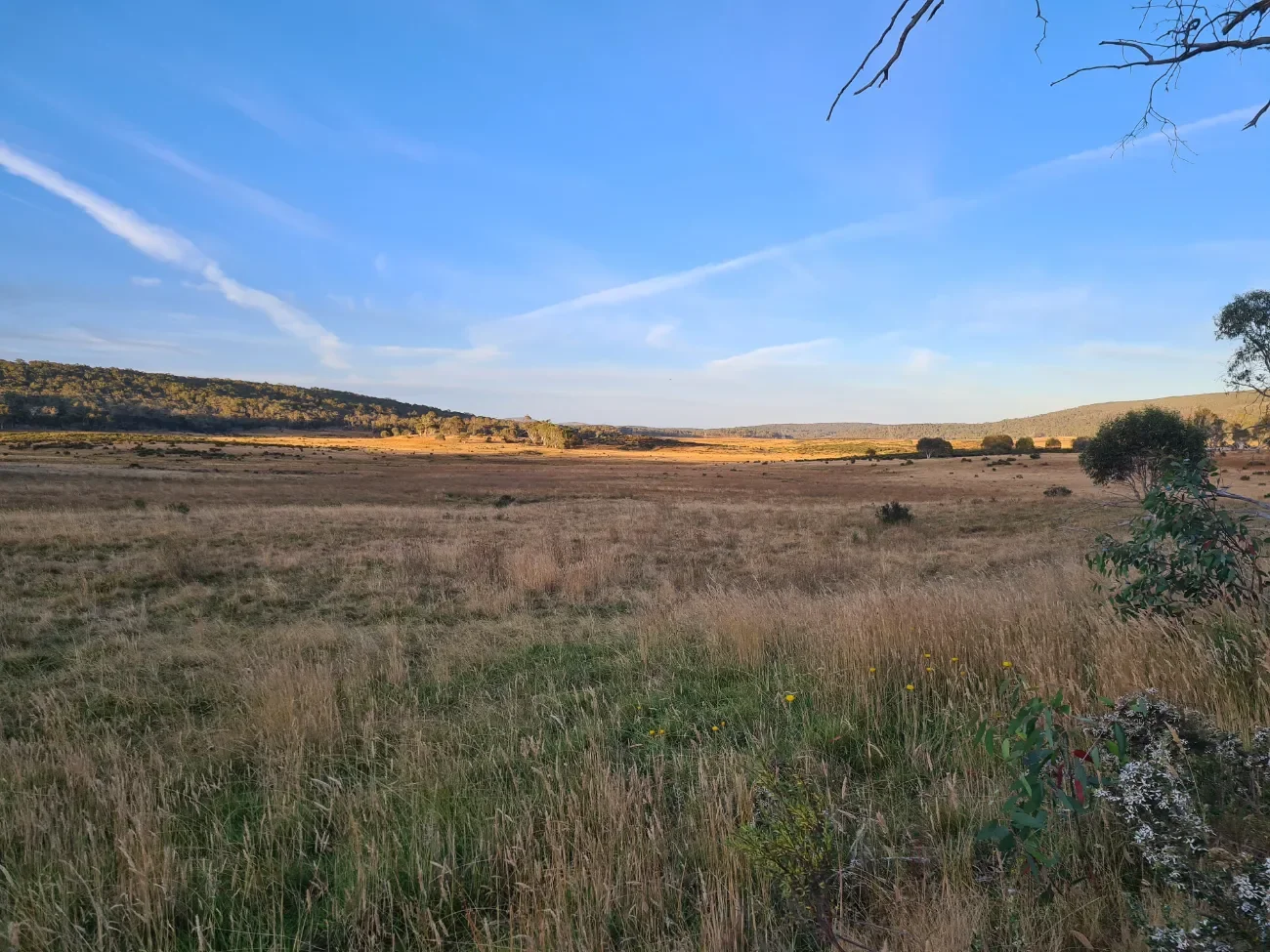
What is Natural Temperate Grassland?
NTG is a naturally treeless or sparsely treed community dominated by native tussock grasses. Characteristic grasses can include Kangaroo Grass (Themeda triandra), Snowgrass (Poa sieberiana), River Tussock Grass (Poa labillardierei), Speargrasses (Austrostipa spp.), Wallaby Grasses (Rytidosperma spp.) and Red Grass (Bothriochloa macra) (Commonwealth of Australia 2016).
The spaces between the tussocks are particularly important. In good-quality grassland they can support a rich mixture of native forbs and other non-grass species, including daisies, peas, lilies, orchids, rushes and small shrubs. This floristic diversity provides resources and habitat for grassland fauna and is an important part of the structure and function of the community.
Natural grassland may also provide habitat for threatened plants and animals. The Commonwealth guide identifies species associated with these grasslands including Striped Legless Lizard (Delma impar), Grassland Earless Dragon (Tympanocryptis pinguicolla; ACT populations are now recognised as Canberra Grassland Earless Dragon, T. lineata), Golden Sun Moth (Synemon plana), Keys Matchstick Grasshopper (Keyacris scurra), Button Wrinklewort (Rutidosis leptorrhynchoides) and Hoary Sunray (Leucochrysum albicans var. tricolor) (Commonwealth of Australia 2016; ACT Government 2025). Small remnants can contribute to movement, pollination and seed dispersal across a fragmented landscape, particularly where they occur near other grassland or grassy woodland vegetation.
Assessment begins with ecological potential
An assessment should not begin with the assumption that an apparently simple or disturbed paddock has little value. Past grazing, drought, slashing, fire and seasonal conditions can strongly influence which species are visible on the day of inspection. Some native plants persist below ground or occur only briefly above ground when conditions are suitable.
A careful assessment considers the landscape position, soils, vegetation structure, dominant species, native and exotic cover, floristic diversity, disturbance history and relationship to surrounding vegetation. Survey effort should be concentrated initially in the areas of highest apparent native diversity, while also considering the extent and condition of the broader patch.
Timing is very important. Spring to early summer is generally the most informative survey period, or another period following sufficient rainfall when native species are evident. Where seasonal conditions are poor, a conservative conclusion may require repeat survey in another season or year. Absence of visible wildflowers during drought or after recent disturbance is not, by itself, evidence that they are absent from the site (Commonwealth of Australia 2016).
Condition thresholds are not a measure of ecological worth
The Commonwealth listing includes diagnostic and condition thresholds used to determine whether a patch forms part of the nationally protected ecological community under the Environment Protection and Biodiversity Conservation Act 1999 (EPBC Act). The assessment considers matters including patch size, the relative cover of native and perennial exotic plants, dominance by particular native grasses or sedges, native non-grass species richness, indicator species and the Floristic Value Score (FVS) developed for assessing grassland condition (Rehwinkel 2015; Commonwealth of Australia 2016).
The minimum patch size considered under the Commonwealth condition thresholds is 0.1 hectares. However, that threshold answers a specific question about the EPBC Act listing. It does not determine whether a smaller remnant has ecological value. The Commonwealth guide expressly recognises that patches below the minimum thresholds may retain important natural values, particularly where they are close to qualifying patches, and should not be excluded from recovery or management actions (Commonwealth of Australia 2016).
A small or degraded remnant may contain important native species, provide connectivity, buffer a higher-quality area, or offer an opportunity for restoration and expansion. Management can protect the intact areas first and then build outwards by controlling threats, encouraging natural regeneration and carefully reintroducing locally indigenous grassland species where appropriate.
Natural Temperate Grassland is not the only possibility
A site that does not meet the Commonwealth definition of NTG may also have conservation value. Derived Native Grassland (DNG) can develop where the tree layer of a grassy woodland has been removed but much of the native ground layer remains. Depending on its location and composition, apparently treeless vegetation may correspond with another threatened ecological community, including DNG forms of White Box-Yellow Box-Blakely's Red Gum Grassy Woodland and Derived Native Grassland (Commonwealth of Australia 2016). State-listed grassy woodland communities, such as Snow Gum Woodland, may also occur in a derived grassland form.
These communities may look very similar in the field. Correct identification requires consideration of the vegetation as it exists now, its landscape setting and soils, and evidence of its likely pre-clearing structure. Threatened species habitat and other protections must also be considered separately. The Commonwealth grassland thresholds are therefore one part of a broader biodiversity assessment, not a universal test of whether native grassland is protected or valuable.
Grasslands must not be overlooked in development planning
Many people assume that trees are the principal biodiversity consideration when planning a development. What is often overlooked is the native grassland between and around woodland patches. This ground layer may be a threatened ecological community in its own right, a DNG form of a listed grassy woodland community, habitat for threatened species, or an important connection between larger remnants.
Environmental assessment under the EPBC Act is not confined to trees. Nationally listed ecological communities include grasslands and grassy woodlands, including communities that may occur in derived grassland form. Potential impacts must therefore be considered in relation to the whole ecological community: its native ground layer, species composition, condition, habitat function, buffers and connections across the landscape (Commonwealth of Australia 2016). In practical terms, grasslands warrant the same careful attention as trees when environmental impacts are being identified and avoided.
Avoidance is the starting point for sustainable planning
Where biodiversity values are present, the first objective should be to avoid them. For a proposed development, this means identifying native grassland and other sensitive areas early, retaining them with an appropriate buffer, and locating buildings, access, services and other disturbance in already degraded parts of the site wherever practicable.
No clearing, earthworks, stockpiling, vehicle access, trenching, spraying or other potentially damaging work should occur within or near a potentially significant grassland until it has been appropriately assessed. Indirect impacts also matter. Changes to drainage, nutrient enrichment, sediment, spray drift, shading, soil compaction and the introduction of weeds can progressively degrade a patch even when the grassland itself is not directly cleared.
Roadside and infrastructure maintenance also require care. Roadsides can support some of the best surviving native vegetation in a district and may contain threatened plants, including Hoary Sunray, Buttercup Doubletail (Diuris aequalis) and Tallong Midge Orchid (Genoplesium plumosum). Appropriate seasonal survey, clearly marked exclusion areas, hygiene procedures and ecologically informed work methods may be necessary before maintenance proceeds.
Why planting trees can damage natural grassland
Tree planting is often assumed to be universally beneficial, but natural grasslands are naturally open ecosystems. Planting trees within them can alter the light, moisture and nutrient conditions on which grassland plants and animals depend. Tree establishment can shade and outcompete native grasses and forbs, disturb soil and rock habitat, introduce weed seed or non-local genetic material, and create perches or cover that change habitat conditions for grassland fauna (Peden 2016).
Revegetation must therefore be matched to the ecosystem. Within native grassland, restoration should focus on grassland species and the recovery of appropriate structure and ecological processes. Where trees or shrubs are needed for another conservation purpose, they should be placed in suitable degraded areas outside the grassland and its protective buffer, using locally indigenous species and site-specific ecological advice.
Yass Gorge and the value of long term care
Yass Gorge contains an outstanding remnant of NTG within the town of Yass. Its grassland supports a diverse native ground layer, including regionally uncommon species, alongside riparian vegetation and fauna habitat. Its urban setting also exposes it to weed invasion, garden escapees, altered drainage, nutrient-rich runoff, dumping, trampling, inappropriate slashing, spray drift and poorly located plantings (Peden 2016).
The Yass Gorge Natural Temperate Grassland Management Plan was prepared in 2016 through the combined efforts of Yass Landcare, Kosciuszko to Coast, Yass Valley Council, government ecologists and local grassland specialists. I prepared the plan in my role as a Kosciuszko to Coast facilitator, drawing on the knowledge and contributions of the people and organisations involved. Two permanent monitoring plots were established to provide baseline FVS and Weed Value Score data and support adaptive management over time (Peden 2016).
The plan's central purpose was not simply to describe the grassland, but to protect its less-disturbed areas, restore degraded areas and improve its condition and extent over the long term. That remains an important model for grassland conservation: protect the best areas, reduce threats, monitor change and allow management to respond to what the grassland is telling us.
Caring for native grassland
Good grassland management is site-specific. It may include careful control of invasive plants, protection from soil disturbance and nutrient enrichment, maintenance of natural drainage, appropriate biomass management, monitoring, and restoration using locally indigenous species. Actions such as grazing, slashing or ecological burning require suitable timing and intensity; an intervention that benefits one site may damage another if it is applied without understanding the vegetation and its history.
The most important first step is to recognise that native grassland may be present. Early ecological assessment allows landholders, planners and project designers to identify areas of value, avoid damage and develop solutions that work with the landscape. Sustainable development is achieved by placing development in the right location - outside the native grassland and other areas of biodiversity value - while protecting and strengthening what remains.
Further information
If you have native grassland on a property you manage, or are planning work in or near a grassland area, seek ecological advice before disturbance occurs. An assessment undertaken at the right time and with the right botanical expertise can help identify the community, threatened species habitat, seasonal survey requirements and practical opportunities for avoidance, protection and restoration.
Sources
ACT Government (2025). Canberra Grassland Earless Dragon (Tympanocryptis lineata).
Natural Temperate Grassland of the South Eastern Highlands: a nationally protected ecological community, Commonwealth of Australia 2016.
Peden, L. (2016). Yass Gorge Natural Temperate Grassland Management Plan. Prepared for Yass Landcare by Kosciuszko to Coast. Appendix A in Yass Valley Council (2017), Yass Gorge Plan of Management 2017-2027.
Rehwinkel, R. (2015). A revised floristic value scoring method to assess grassland condition. In Grass half full or grass half empty? Valuing native grassy landscapes. Proceedings of the Friends of Grasslands 20th Anniversary Forum, Canberra, 30 October-1 November 2014. Friends of Grasslands Inc.
Talk to an ecologist